

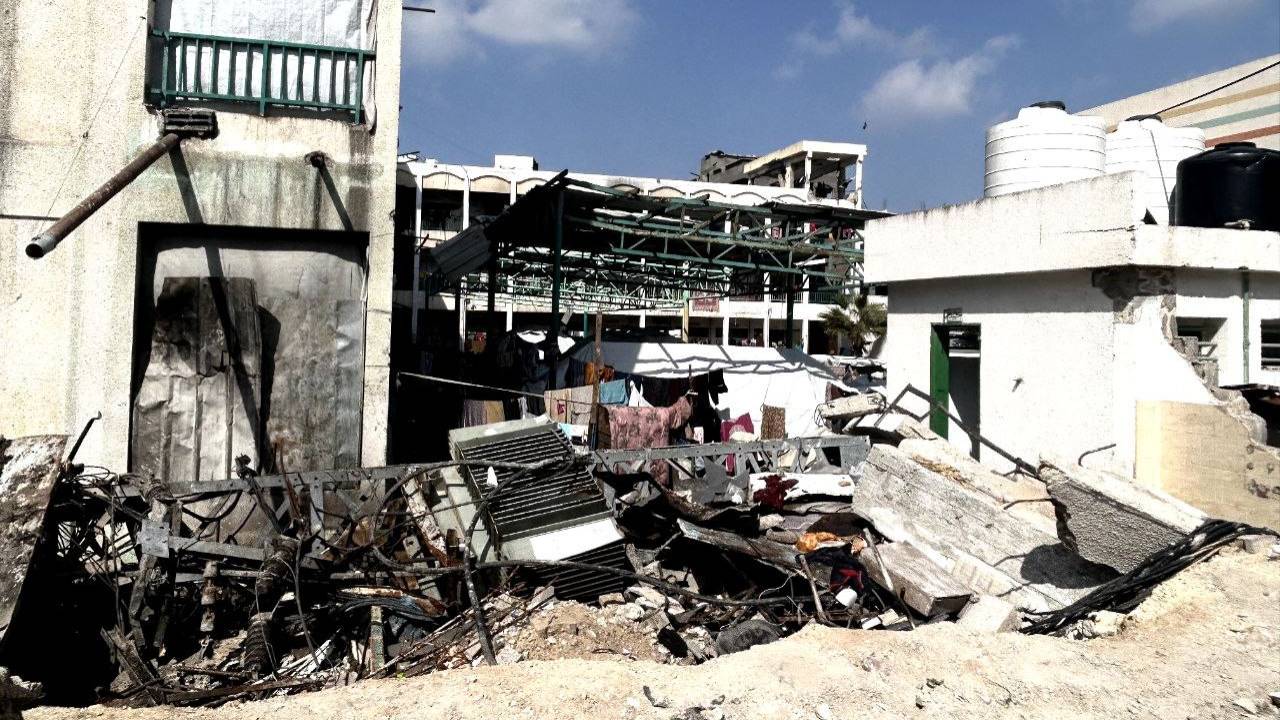
Una scuola distrutta è usata come rifugio da persone sfollate. Gaza, febbraio 2025. Foto di Jaber Jehad Badwan. Fonte Wikimedia Commons / CC BY 4.0
Pubblichiamo un testo della scrittrice palestinese Sara Awad. La traduzione di servizio è della Redazione, il testo originale di Awad viene pubblicato in lingua inglese.
Dreaming tastes strange when it comes with guilt. I had long hoped for a scholarship to study abroad, like any other international student – and now it’s real. I have a place in Italy to complete my bachelor’s degree, just as I always imagined. But I never dreamed my scholarship would arrive in the middle of a war, as my ticket out of survival.
Since September 30, 2025, the Italian government has undertaken a major operation to offer a future for Gaza’s students. While evacuation to Italy was previously available to Palestinians only for medical treatment and family reunification, the Italian government has now taken the unprecedented step of opening the nation’s universities under the Italian Universities for Palestinian Students project, allowing Gazan students to pursue their studies abroad away from the war.
The Italian Universities for Palestinian Students project offers a unique lifeline for young students whose academic futures were destroyed in Gaza. Since October 2023, nearly all of Gaza’s universities and schools have been bombed, leaving students struggling to access education. Back in August 2025, the Palestinian Ministry of Education and Higher Education reported that more than 18,000 Palestinian students had already been killed since October 2023, and the deaths have continued to mount since then.
I am one of the more than 230 Palestinian students who fled to Italy from Gaza through the new Italian Universities for Palestinian Students program. I was evacuated from Gaza in December 2025 and am now pursuing a bachelor’s degree in languages at the University of Siena. Even though Gaza is my beloved home, I made the painful decision to leave because I will not accept seeing my education journey destroyed in front of my eyes. As Israel wishes.
I survived countless horrors alongside my family. I spent four months in Gaza’s hospitals as I was a caretaker of my beloved mother after she was injured, carrying responsibilities that weighed heavily on both my shoulders and my heart.
My mind was torn between two directions: how to survive each day and how to hold on to the dream of earning a scholarship that could take me back to myself.
I left Gaza and my family behind. Not because I would love to live abroad away from my home, but because the war left me with no choice.
The war began when I was 19. Today, I am 22 and should have been graduating from the Islamic University of Gaza, where I was studying English before October 2023. Instead, the war interrupted everything I had planned for my future.
My life changed completely. In a single night, I went from Gaza to Siena, leaving behind the world I had known for more than 20 years. My family, my home, my memories, and the life I had built were suddenly far away.
When I received a call from the Italian Embassy informing me that I had been accepted through the scholarship corridor, it brought a sense of hope at a time when hope had become difficult to find. It offered a chance to continue my education and begin rebuilding a future shaped by years of war and loss. Yet, like many other Palestinian students, I arrived carrying not only my documents and a phone, but also the weight of everything I had left behind.
I was supposed to be happy, but I was shocked. Shocked of peace, normal people, food, clean air, and shocked of not hearing air drones or bombs.
Survival guilt started to burn my soul from the very first days in Italy. And now after six months, the survival guilt lives with me and I become more saddened than ever.
Since my evacuation, three additional humanitarian evacuations have been successfully carried out. Dozens of Palestinian students and scholars have arrived in Italy to continue their education at institutions such as the University of Turin, the University of Bari, the University of Milan, the University of Siena, and many other Italian universities that have opened their doors to students from Gaza, offering them an opportunity to rebuild futures disrupted by war.
Yet the most recent evacuation was marked by a troubling exception. While thirty‑nine students and scholars safely reached Italy, one scholar never arrived. Despite being accepted to continue his academic journey in Rome and reportedly receiving the necessary approvals to travel, Dr. Mahmoud Al Najar was stopped at the border before he could complete the journey.
Dr. Mahmoud Al Najar should have been celebrating a new beginning. Instead, on the day he turned 38, he was reportedly arrested while attempting to leave Gaza through the Karam Abu Salem crossing. Originally from Jabalia camp in northern Gaza, Al Najar has devoted his life to education and research. He holds a bachelor’s degree in industrial engineering, a master’s degree in disaster management, and completed a PhD in Business Administration with a focus on artificial intelligence during the war. He had also been accepted to continue his academic journey at the University of Rome Tor Vergata.
Al Najar’s story is marked by profound personal loss. Following an Israeli strike on his family home in October 2024, he lost his wife, his four children – Yazan, Renad, Mohammad, and Amro – as well as his father and siblings, becoming the sole surviving member of his immediate family. After enduring devastation that would break most people, he sought to rebuild his life through education and scholarship. Yet as he prepared to leave Gaza and begin a new chapter, that path was interrupted.
With no clear known explanation of his detention, Mahmoud’s journey ended before it could begin. After spending the two years of the war, enduring the pain of the loss and the pain of surviving the war, he was finally granted a scholarship in Italy, Italy welcomed him to give him a new beginning, a reclaim of what he had been through. Yet, Israel trapped him in Karam Abu Salam borders, and led him to a mysterious place.
I am in contact with his family, the only latest news they have received is that Mahmoud Al Najar is currently being held in Ashkelon prison, Israel. The family firmly rejects the accusation that he is a terrorist. Furthermore, Mahmoud is not physically fit to carry out any military activity. His life choice was to be a researcher and an academic. He was a respected professor at the Islamic University of Gaza and UCAS university.
After losing his family, Mahmoud remarried, and his wife is currently pregnant. The family says they have received no information from the Italian government or the Italian embassy regarding his situation. They are deeply concerned, especially his wife, who had hoped to join him and leave Gaza after his departure.
What happened to Al Najjar raises many questions for students still awaiting their evacuation. They are worried that even if they obtain security clearance, Israel can detain them.
From afar, obtaining an opportunity to study in Italy may seem simple. Many people see that Palestinian students have been accepted into Italian universities and assume that this opportunity comes easily. However, for me and the other 230 students, the journey has been filled with hardship, sacrifice, and survival.
We endured countless challenges to reach this opportunity, to leave, to learn, and to rebuild futures that were shattered by war and destruction. And when we arrived, we arrived with nothing but our phones and documents. Literally we survived with our souls, exhausted souls.
Perhaps this opportunity did not cost us money, but it cost us much more. It cost us years of our lives, our mental well‑being, and the burden of responsibilities we carried long before arriving here. Most of us are in our twenties, trying to navigate life alone in a foreign country, surrounded by a new language, unfamiliar faces, and a different culture.
Evacuation from Gaza was not the end of our struggle. It was only the beginning of a new battle, added to a long history of battles we have already endured.
If I have one wish after surviving the war, it is to be reunited with my family, to stop waking up to news of suffering and violations coming from Gaza, and to see every student receive their fundamental right to education, freedom, and a future free from fear.
I sogni hanno un sapore strano quando sono accompagnati dal senso di colpa. Da molto tempo speravo in una borsa di studio per studiare all’estero, come qualsiasi studente internazionale. Ora quel sogno è diventato realtà. Ho un posto in Italia dove terminare la mia laurea triennale, proprio come avevo sempre immaginato. Ma non avrei mai pensato che la mia borsa di studio sarebbe arrivata nel bel mezzo di una guerra, come un mio biglietto per la sopravvivenza.
Dal 30 settembre 2025, il governo italiano ha avviato un’importante iniziativa per offrire un futuro agli studenti di Gaza. In passato, l’evacuazione in Italia era consentita ai palestinesi solo per motivi di cure mediche o ricongiungimento familiare. Ora invece il governo italiano ha ora compiuto un passo senza precedenti aprendo le porte delle università nazionali attraverso il progetto Italian Universities for Palestinian Students – Iupals, permettendo agli studenti di Gaza di proseguire gli studi all’estero, lontano dalla guerra.
Il progetto Italian Universities for Palestinian Students – Iupals rappresenta un’ancora di salvezza unica per i giovani studenti il cui futuro accademico è stato distrutto a Gaza. Dall’ottobre 2023, quasi tutte le università e le scuole di Gaza sono state bombardate, lasciando gli studenti senza accesso sicuro all’istruzione. Già nell’agosto 2025, il Ministero palestinese dell’Istruzione e dell’Istruzione Superiore palestinese aveva riferito che oltre 18.000 studenti palestinesi erano già stati uccisi dall’ottobre 2023, e da allora il numero delle vittime ha continuato a salire.
Sono una tra gli oltre 230 studenti palestinesi arrivati in Italia da Gaza grazie al programma Italian Universities for Palestinian Students – Iupals. Sono stata evacuata da Gaza nel dicembre 2025 e oggi frequento corso di laurea triennale in lingue all’Università di Siena.
Sebbene Gaza sia la mia amata casa, ho preso la dolorosa decisione di partire perché non accetto di vedere il mio percorso di studi distrutto davanti ai miei occhi per volontà di Israele.
Sono sopravvissuta, insieme alla mia famiglia, a innumerevoli orrori. Ho trascorso quattro mesi negli ospedali di Gaza occupandomi della mia adorata mamma dopo che era rimasta ferita, assumendomi responsabilità che pesavano enormemente sulle mie spalle e sul mio cuore.
La mia mente era divisa tra due pensieri: come riuscire a sopravvivere giorno dopo giorno e come continuare e credere nel sogno di ottenere una borsa di studio che potesse aiutarmi a ritrovare me stessa.
Mi sono lasciata alle spalle Gaza e la mia famiglia. Non perché desiderassi vivere all’estero lontano da casa, ma perché la guerra non mi ha lasciato scelta.
La guerra è iniziata quando avevo diciannove anni. Oggi ne ho ventidue, e avrei dovuto laurearmi all’Università Islamica di Gaza, dove studiavo inglese prima dell’ottobre 2023. E invece, la guerra ha interrotto tutto quello che avevo pianificato per il mio futuro.
La mia vita è cambiata completamente. In una notte, sono passata da Gaza a Siena, lasciando dietro di me il mondo che avevo conosciuto fino a quel momento per più di vent’anni. La mia famiglia, la mia casa, i miei ricordi, la vita che avevo costruito erano improvvisamente lontane.
Quando ho ricevuto la telefonata dall’Ambasciata italiana che mi informava che ero stata accettata nel corridoio umanitario delle borse di studio, è arrivata la speranza in un momento in cui la speranza era diventata difficile da trovare. Era una possibilità di continuare i miei studi e cominciare a ricostruire un futuro segnato da anni di guerra e perdite. Eppure, come molti altri studenti palestinesi, sono arrivata non solo con i miei documenti e il mio telefono, ma anche con il peso di tutto quello che mi ero lasciata alle spalle.
Avrei docuto essere felice, ma ero sotto shock. Travolta dalla pace, dalla gente normale, dal cibo, dall’aria pulita, dal non sentire droni e bombe.
Il senso di colpa del sopravvissuto ha cominciato a bruciare la mia anima dai primi giorni in Italia. Dopo sei mesi qui, il senso di colpa del sopravvissuto mi abita, e non sono mai stata così triste.
Dal giorno della mia evacuazione, ci sono stati altri tre corridoi umanitari. Decine di studenti e accademici palestinesi sono arrivati in italia per continuare a studiare nelle Università di Torino, Bari, Milano, Siena, e molte altre istituzioni universitarie italiane hanno aperto le loro porte agli studenti di Gaza, offrendo loro l’opportunità di ricostruire il loro futuro interrotto dalla guerra. E tuttavia, l’ultima evacuazione è stata caratterizzata da una eccezione preoccupante. Mentre trentanove studenti e accademici sono giunti sani e salvi in Italia, uno di loro non è mai arrivato.
Benché fosse stata accettata la sua richiesta di continuare il suo percorso accademico a Roma, e avesse ricevuto i documenti necessari per viaggiare, Mahmoud Al Najar è stato fermato alla frontiera prima di poter iniziare il suo viaggio.
Il Professore Mahmoud Al Najar avrebbe dovuto festeggiare un nuovo inizio. Invece, nel giorno in cui ha compiuto trentotto anni, è stato arrestato mentre cercava di attraversare il valico di frontiera di Karam Abu Salem. Originario del campo profughi di Jabalia nel nord di Gaza, Al Najar ha dedicato la sua vita allo studio e alla ricerca. Ha una laurea triennale in ingegneria industriale e una laurea magistrale in disaster management, e un dottorato in amministrazione aziendale con particolare riferimento all’intelligenza artificiale in guerra. Sarebbe stato accolto dall’Università di Roma Tor Vergata.
La storia di Al Najar è segnata da terribili perdite personali. Dopo un attacco israeliano alla sua casa nell’ottobre 2024, ha perso sua moglie e i suoi quattro figli Yazan, Renad, Mohammad e Amro, suo padre e i suoi fratelli: è l’unico sopravvissuto. Dopo una devastazione che avrebbe distrutto chiungue, ha tentato di ricostruire la sua vita con lo studio. E nonostante questo, mentre cercava di fuggire da Gaza e aprire un nuovo capitolo, il suo percorso è stato interrotto.
In assenza di una chiara spiegazione per la sua detenzione, il viaggio di Mahmoud è terminato prima di cominciare. Dopo due anni di guerra, il dolore della sofferenza e di essere sopravvissuto, aveva finalmente ottenuto una borsa di studio e l’Italia lo aveva accolto per offrirgli un nuovo inizio, una rivalsa per quello che aveva vissuto. Invece Isreale lo ha bloccato alla frontiera di Karam Abu Salam e lo ha portato in un luogo sconosciuto.
Sono in contatto con la sua famiglia, e le ultime notizie che hanno ricevuto dicono che Mahmoud Al Najar è detenuto nella prigione di Ashkelon in Israele. La famiglia rifiuta fermamente l’accusa che egli sia un terrorista. Peraltro, Mahmoud non è nelle condizioni fisiche per portare avanti alcun tipo di attività militare. La sua scelta di vita è stata quella di essere un ricercatore e un accademico. Era uno stimato professore all’Università Islamica di Gaza e all’Università UCAS.
Dopo aver perso la sua famiglia, Mahmoud si è risposato, e sua moglie adesso è incinta. La famiglia riferisce che non ha ricevuto nessuna informazione dal governo o dall’ambasciata italiana circa la sua situazione. Sono estremamente preoccupati, in particolare sua moglie, che sperava di raggiungerlo e lasciare Gaza dopo la sua partenza.
Quello che è accaduto ad Al Najar solleva molte preoccupazioni per gli studenti che ancora attendono di lasciare Gaza. C’è il timore che, anche ottenuti i documenti necessari per la partenze, Israele possa arrestarli.
Da fuori, avere la possibilità di studiare in Italia può apparire semplice. Molte persone vedono che gli studenti palestinesi sono stati accolti nelle università italiane e possono pensare che sia facile. Tuttavia, per me e gli altri duecentotrenta studenti, è stato un percorso di difficoltà, sacrificio e perseveranza.
Abbiamo sopportato innumerevoli imprese per ottenere l’opportunità di scappare, di studiare e di costruire un futuro devastato dalla guerra e dalla distruzione. Al nostro arrivo, avevamo solo I nostri telefoni e i nostri documenti. Siamo, letteralmente, sopravvissuti con le nostre anime, anime esauste.
Certo, questa opportunità non ci è costata dei soldi, ma molto di più. Anni delle nostre vite, la nostra salute mentale, e il peso delle responsabilità che avevamo per molto tempo prima di arrivare qui. La maggioranza di noi ha meno di trent’anni, e siamo soli in un paese straniero, circondati da una nuova lingua, da volti sconosciuti e una cultura diversa dalla nostra.
La fuga da Gaza non ha costituito la fine delle nostre sofferenze. È stato solo l’inizio di una nuova battaglia, da aggiungere al lungo elenco di quelle che abbiamo già dovuto attraversare.
Il mio desiderio dopo essere sopravvissuta alla guerra è quello di riunirmi con la mia famiglia, di smettere di svegliarmi con le notizie delle violenze e delle devastazioni a Gaza, e che ogni studente possa godere del suo diritto fondamentale a ricevere una educazione, alla libertà, ad avere un futuro senza guerra.